+90 505 054 8890 info@cottonandsteam.com
Soldes de Noël : réductions 29%! Achetez maintenant

Mini Cart

Here’s a question we hear often: “I love Turkish textiles, but should I choose cotton or bamboo?”

It’s a good question—and the honest answer is that it depends entirely on you. Your climate. Your skin. Your priorities. The way you actually live, not the way lifestyle magazines suggest you should.

Both Turkish cotton and bamboo textiles come from the same artisan tradition. Both are crafted with the same centuries-old techniques. Both will outlast and outperform mass-produced alternatives by years.

But they feel different. They perform differently. And choosing the right one means understanding what each does best.

Consider this your guide to making that choice with confidence.


The Short Answer (For Those in a Hurry)

Choose Turkish cotton if you:

  • Love classic, plush softness
  • Want maximum absorbency
  • Prefer textiles that develop character over time
  • Live in a moderate climate
  • Value the traditional hammam experience

Choose bamboo (or bamboo-cotton blends) if you:

  • Have sensitive or reactive skin
  • Run hot or live in a warm climate
  • Want the silkiest possible hand feel
  • Prioritize eco-conscious materials
  • Prefer lightweight, breathable fabrics

Still here? Good. Let’s explore the nuances.


Understanding the Materials

Turkish Cotton: The Heritage Choice

Turkish cotton has six centuries of refinement behind it. Grown in the Aegean river valleys, woven by artisans whose families have practiced the craft for generations, it represents the pinnacle of what cotton can become.

The fibers are long-staple, meaning each individual fiber stretches further than ordinary cotton. This creates fabric that’s stronger, softer, and more absorbent. But here’s what makes Turkish cotton unique: it improves with use. The fibers relax and bloom over time, becoming progressively softer through dozens—even hundreds—of wash cycles.

Turkish cotton is substantial without being heavy. It absorbs moisture eagerly and releases it efficiently. It feels like quality because it is quality, in the most literal sense.

Bamboo: The Modern Evolution

Bamboo textiles represent something newer—a material that Turkish artisans have embraced and elevated using traditional techniques.

Bamboo fiber comes from the pulp of bamboo grass, processed into a silky viscose that can be woven alone or blended with cotton. The resulting fabric has properties that cotton simply can’t match: a natural sheen, extraordinary softness from the first touch, and inherent temperature regulation that keeps you comfortable in any climate.

When Turkish weavers apply their centuries of expertise to bamboo fiber, the result is something remarkable—a textile that honors tradition while solving thoroughly modern problems.


The Feel: Plush vs. Silky

This is often the deciding factor, and it’s worth experiencing both before you choose.

Turkish cotton has a soft, textured feel. There’s substance to it—you know you’re holding something real. The surface has gentle variation, the hallmark of natural fiber and artisan construction. It feels cozy, enveloping, like being wrapped in comfort.

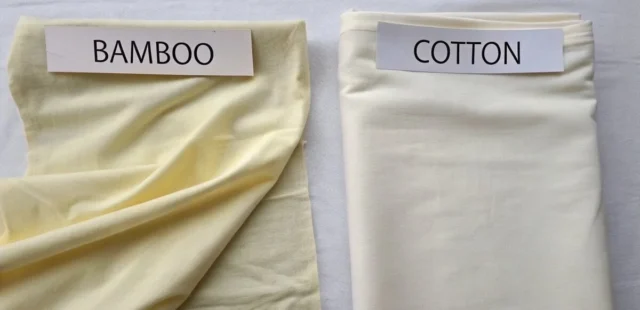
Bamboo feels different immediately. The first word most people use is “silky.” The fibers create a smooth, almost liquid drape against skin. It’s lighter, more fluid, with a subtle sheen that catches light. Where cotton feels like a warm embrace, bamboo feels like a cool caress.

Neither is better. But one will feel like home to you.

Our recommendation: If you love the feeling of a well-worn favorite sweater, you’ll gravitate toward cotton. If you prefer the sensation of sliding into high-thread-count sheets, bamboo will speak to you.


Absorbency: Different Strengths

Both materials excel at moisture management, but they approach the job differently.

Turkish cotton is the absorbency champion in pure capacity. Those long-staple fibers create maximum surface area, pulling water away from skin quickly and thoroughly. A Turkish cotton towel can absorb several times its weight in water—and still dry you effectively.

Bamboo absorbs moisture slightly less aggressively but offers something cotton can’t: wicking. Bamboo fibers don’t just absorb water; they actively move it away from your skin and spread it across the fabric surface for faster evaporation. The result is a “drier” feeling even when the towel has absorbed significant moisture.

Our recommendation: For post-shower drying and beach days, Turkish cotton’s superior absorption is ideal. For workouts, hot sleepers, and humid climates where you want moisture moved away from skin continuously, bamboo has the edge.


Temperature Regulation: Warm vs. Cool

Here’s where the two materials diverge most significantly.

Turkish cotton provides gentle insulation. It holds a small amount of warmth against your body, making it perfect for stepping out of a hot shower into a cool bathroom, or wrapping up on a crisp morning. It’s comforting without being stifling.

Bamboo is naturally thermoregulating. The fiber structure allows air to circulate while simultaneously wicking moisture, creating a cooling effect against skin. In warm conditions, bamboo feels noticeably cooler than cotton. In cool conditions, it still provides coverage without causing overheating.

Our recommendation: If you’re always cold, choose cotton. If you’re always warm—or if your climate swings between extremes—bamboo adapts better.


Skin Sensitivity: The Gentle Giant

This matters more than most people realize.

Turkish cotton is naturally hypoallergenic when processed without harsh chemicals. High-quality Turkish cotton, especially organic varieties, is gentle enough for most skin types. However, some people with eczema, psoriasis, or highly reactive skin may find that even premium cotton creates subtle friction.

Bamboo has inherent properties that make it exceptional for sensitive skin. The smooth fiber surface creates less friction against skin. Bamboo is naturally antibacterial—the bamboo plant produces a bio-agent called “bamboo kun” that survives processing and inhibits bacterial growth in the fabric. This means fewer irritants, less odor, and a cleaner feel against reactive skin.

Our recommendation: If you’ve ever experienced irritation from textiles, or if you’re shopping for someone with skin sensitivities, bamboo is the safer choice. For most people, either material works beautifully.


Durability: The Long View

Both materials, when crafted with Turkish artisan techniques, will outlast mass-produced alternatives by years. But they age differently.

Turkish cotton develops what we call “character.” It softens and relaxes, becoming more personal over time. A well-maintained Turkish cotton robe becomes like a second skin after a year of use—better than new. Expect 5-10+ years of regular use from quality pieces, with proper care.

Bamboo maintains its original character more consistently. It will soften slightly but won’t transform the way cotton does. Some people prefer this stability; others miss the evolution. Bamboo is also slightly more delicate—it requires gentler washing and shouldn’t be exposed to high heat. With proper care, expect 3-7 years of use.

Our recommendation: If you’re the type who treasures a favorite item that improves with age, cotton rewards that relationship. If you prefer consistent performance and don’t want to think much about care instructions, bamboo asks less of you day-to-day but may need replacing sooner.


Environmental Considerations

Both materials have sustainability stories, though they’re different stories.

Turkish cotton is a natural fiber that biodegrades completely. Organic Turkish cotton is grown without synthetic pesticides, making it a responsible choice. The environmental impact depends largely on water usage in cultivation and whether chemical dyes are used in processing.

Bamboo has remarkable eco-credentials at the growing stage. Bamboo is the fastest-growing plant on Earth, requires no pesticides, needs minimal water, and actually improves soil quality. It produces 35% more oxygen than equivalent trees and sequesters significant carbon.

However, most bamboo fabric (including ours) is bamboo viscose, which requires chemical processing to transform the plant into fiber. This processing can be done responsibly or irresponsibly, depending on the manufacturer. We work only with producers who use closed-loop systems that recapture and reuse processing chemicals.

Our recommendation: Both choices are far more sustainable than synthetic alternatives. If minimal processing matters most to you, cotton is simpler. If you prioritize renewable sourcing and carbon footprint, bamboo has advantages.


Matching Material to Lifestyle

Let’s get practical. Here’s how to choose based on how you actually live:

Choose Cotton Bathrobes If You:

  • Love wrapping up after a hot shower
  • Keep your home on the cooler side
  • Want a robe that becomes softer and more personal over years
  • Enjoy the classic spa experience
  • Don’t mind a bit more weight and bulk

Choose Bamboo Bathrobes If You:

  • Tend to overheat easily
  • Live in a warm or humid climate
  • Have sensitive skin or allergies
  • Want the silkiest possible feel
  • Prefer lightweight fabrics that don’t weigh you down

Choose Cotton Towels If You:

  • Want maximum drying power
  • Prefer a plush, substantial feel
  • Use towels primarily for post-shower drying
  • Appreciate textiles that improve with washing

Choose Bamboo Towels If You:

  • Work out frequently and need odor resistance
  • Want towels that stay fresh between washes
  • Travel often and need quick-drying, lightweight options
  • Have family members with skin sensitivities

Choose Cotton Throws If You:

  • Want warmth and coziness
  • Use throws primarily in air-conditioned spaces
  • Love the look of textured, artisan weaves
  • Want a throw that can double as a light blanket

Choose Bamboo Throws If You:

  • Use throws year-round, including summer
  • Want something light enough to drape without bulk
  • Prefer a silky, smooth texture
  • Value breathability over warmth

The Blend: Best of Both Worlds

Here’s something worth knowing: you don’t always have to choose.

Many of our most popular pieces are Turkish cotton-bamboo blends, combining the absorbency and durability of cotton with the silkiness and temperature regulation of bamboo. These blends typically range from 60/40 to 70/30 cotton-to-bamboo ratios.

The result is a textile that:

  • Absorbs like cotton but wicks like bamboo
  • Feels silkier than pure cotton but more substantial than pure bamboo
  • Regulates temperature better than cotton alone
  • Maintains durability closer to cotton
  • Works beautifully across climates and seasons

If you’re genuinely torn between the two materials, a blend lets you experience the benefits of both.


The Invitation to Experience

Here’s what we’ve learned after years of working with both materials: people know what they love once they feel it.

Some customers touch bamboo and never look back. Others pick up a Turkish cotton towel and feel an immediate sense of rightness. There’s no wrong answer—only your answer.

The beauty of artisan Turkish textiles is that either choice connects you to centuries of craft, supports traditional weaving communities, and brings genuine quality into your daily rituals.

Cotton or bamboo, you’re choosing well.


Cotton & Steam offers both pure Turkish cotton and premium bamboo collections, each crafted by artisan weavers using traditional techniques. Explore our range to find the textiles that match your lifestyle—or reach out to us directly for personalized recommendations.
The towel debate that housekeeping managers have already settled—and why their answer might surprise you.


Walk into any five-star hotel, and you’ll notice the towels immediately. Thick. Pristine. The kind of softness that makes you briefly consider slipping one into your suitcase.

For decades, “Egyptian cotton” was the phrase luxury hotels used to signal quality. It appeared on hang tags and in-room cards, a shorthand for premium that guests understood instinctively.

But something has shifted.

Quietly, without fanfare, the world’s most discerning hotels have been making a different choice. From boutique properties in Santorini to flagship resorts in the Maldives, Turkish cotton has become the insider preference—the choice of housekeeping directors who’ve tested everything and procurement managers who answer to the bottom line.

Why the change? And what does it mean for the towels in your own bathroom?

Let’s look at what the hospitality industry learned the hard way.


The Basics: Two Legendary Cottons

Both Turkish and Egyptian cotton earned their reputations legitimately. These aren’t marketing inventions—they’re distinct agricultural products shaped by geography, climate, and centuries of cultivation.

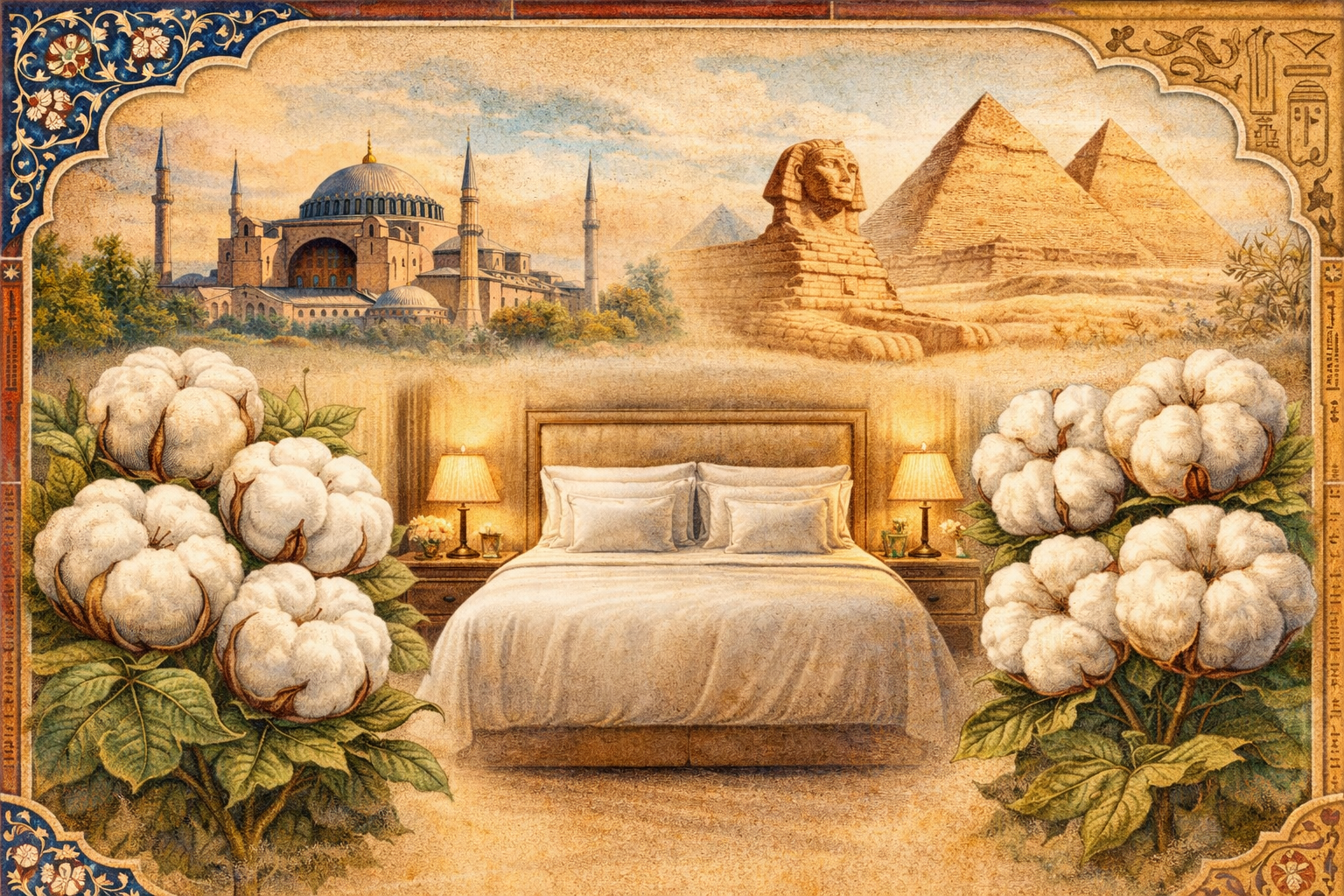
Egyptian cotton (Gossypium barbadense) grows in the Nile River Valley, where predictable flooding historically created ideal growing conditions. It’s known for extra-long staple fibers that produce smooth, lustrous fabric with a silky hand feel.

Turkish cotton (also Gossypium barbadense, but a different cultivar) thrives in the Aegean coastal region of western Turkey. The combination of Mediterranean climate, mineral-rich soil, and careful cultivation produces fibers that are both long and uniquely structured—creating cotton with exceptional absorbency and durability.

On paper, they sound similar. In practice, they perform very differently.


The Feel: Silky vs. Soft

Here’s where most comparisons begin, and where first impressions can be deceiving.

Pick up a high-quality Egyptian cotton towel, and your first sensation is smoothness. The tightly woven, high-thread-count construction creates a sleek, almost polished surface. It feels expensive. It photographs beautifully.

Pick up an authentic Turkish cotton towel, and the sensation is different—a plush softness that feels more organic, more textured. Less like a luxury product and more like something that wants to be used.

This isn’t a quality difference. It’s a philosophy difference.

Egyptian cotton is engineered to impress at first touch. Turkish cotton is engineered to perform over years of use. In fact, Turkish cotton towels are famous for becoming softer with each wash, as the fibers relax and bloom. Egyptian cotton tends to maintain its original feel—which means it has nowhere to go but down.

The hotel insight: Guest satisfaction surveys consistently show that “softness” complaints increase over a towel’s lifespan with Egyptian cotton. Turkish cotton generates fewer complaints in year two than year one.


The Performance: Absorbency and Drying

This is where the comparison becomes less subjective—and where Turkish cotton pulls decisively ahead.

Absorbency: Turkish cotton fibers have a unique structure that creates more surface area per thread. The result is a towel that absorbs moisture faster and more completely. In independent testing, Turkish cotton towels typically absorb 20-30% more water by weight than comparable Egyptian cotton towels.

Drying speed: Here’s the factor that changed everything for hotels. Turkish cotton releases moisture as efficiently as it absorbs it. A Turkish cotton towel hung in a bathroom will dry in roughly half the time of an Egyptian cotton towel of similar weight.

Why does this matter?

For hotels, faster drying means lower energy costs in industrial laundry operations, less mildew risk, and fresher-smelling linens. A single large resort can save tens of thousands of dollars annually simply by switching cotton types.

For you, faster drying means towels that don’t develop that musty, never-quite-dry smell between uses. It means lighter luggage when traveling. It means towels that work in humid bathrooms, beach houses, and gym bags where Egyptian cotton would struggle.

The hotel insight: Housekeeping directors report 40-50% reduction in “towel odor” complaints after switching to Turkish cotton—without changing laundering frequency.


The Durability: Investment vs. Expense

This is perhaps the most important comparison, and the one least discussed in marketing materials.

Egyptian cotton’s long fibers create beautiful, smooth fabric. But that smoothness comes from a tight weave and high thread count that can be surprisingly fragile. The loops in Egyptian cotton terry towels are prone to snagging, pulling, and flattening over time. Many owners notice significant degradation within 50-75 wash cycles.

Turkish cotton takes a different approach. The traditional flat weave—developed over centuries for the demanding environment of the hammam—creates a fabric that actually strengthens with use. The fibers compress and interlock rather than fraying and separating.

The practical result: a quality Turkish cotton towel can easily last 200-300 wash cycles while continuing to improve in softness. Some families report using the same Turkish towels for a decade or more.

The hotel insight: When procurement managers calculate cost-per-use rather than cost-per-unit, Turkish cotton wins decisively. One luxury resort chain reported that switching to Turkish cotton reduced their annual towel replacement budget by 35%—while simultaneously improving guest satisfaction scores.


The Weight Question: More Isn’t Always More

Walk through a department store, and you’ll see towels marketed by their GSM (grams per square meter)—essentially, their weight. The implication is clear: heavier towels are better towels. 600 GSM is good. 800 GSM is better. 900 GSM is luxury.

This is Egyptian cotton marketing, and it’s based on a flawed premise.

Heavier towels aren’t more absorbent—they just hold more water, which then takes longer to evaporate. That thick, fluffy towel that feels so luxurious in the store becomes a soggy, slow-drying burden in actual use.

Turkish cotton towels typically range from 300-500 GSM. They feel lighter because they are lighter. But that lightness is a feature, not a flaw. It’s the result of a weaving tradition that optimized for function over the appearance of luxury.

The hotel insight: When one international hotel chain tested guest perception, they discovered something surprising. Guests rated lighter Turkish cotton towels as feeling “more luxurious” than heavier Egyptian cotton alternatives—because the Turkish towels actually dried them more effectively. Perceived luxury, it turns out, is about performance, not weight.


The Authenticity Problem: What You’re Actually Buying

Here’s an uncomfortable truth that the cotton industry doesn’t advertise: most “Egyptian cotton” isn’t.

A 2016 investigation found that up to 90% of products labeled “Egyptian cotton” in the United States contained little to no actual Egyptian cotton. The label had become a marketing term rather than a geographic designation, with manufacturers blending cheaper cotton varieties or simply mislabeling products entirely.

The Egyptian cotton industry has since implemented a certification program, but enforcement remains inconsistent. When you buy “Egyptian cotton” from most retailers, you’re trusting a supply chain with a documented history of fraud.

Turkish cotton faces fewer authenticity issues for a simple reason: the production is smaller and more traceable. The Aegean growing region is geographically limited, and the weaving tradition remains concentrated in identifiable communities. When you buy from reputable sources, you can often trace your textile to a specific region, sometimes to a specific cooperative of artisans.

The hotel insight: Luxury hotels now require certification documentation and often conduct independent fiber testing. Many have simply moved to Turkish cotton because verification is more straightforward and reliable.


The Verdict: When to Choose Each

Let’s be fair: Egyptian cotton isn’t bad cotton. For certain applications, it remains an excellent choice.

Choose Egyptian cotton when:

  • You prioritize a smooth, silky hand feel over performance
  • You’re buying sheets (where breathability matters more than absorbency)
  • You want a formal, polished aesthetic
  • You have excellent bathroom ventilation and low humidity
  • You don’t mind replacing towels every few years

Choose Turkish cotton when:

  • You want towels that improve with age
  • Absorbency and quick-drying matter to you
  • You live in a humid climate or have limited bathroom ventilation
  • You travel frequently and value packability
  • You’re calculating value over a decade, not a single purchase
  • You want to know exactly where your textiles come from

For most people, in most situations, Turkish cotton is simply the better choice for towels, bathrobes, and anything that needs to manage moisture effectively.

The luxury hotels figured this out years ago. Now you know too.


The Real Luxury: Textiles That Work

True luxury isn’t about labels or price points. It’s about objects that perform their function exceptionally well, that improve rather than degrade with use, that solve problems rather than creating them.

By that definition, Turkish cotton is among the most luxurious textiles available. Not because of its heritage (though that’s remarkable), not because of its scarcity (though it is limited), but because it simply works better.

The next time you step out of a shower and reach for your towel, you’ll know instantly which tradition it comes from.

Make sure it’s the right one.


Cotton & Steam sources authentic Turkish cotton from the Aegean region, working directly with artisan weavers who’ve perfected their craft over generations. Experience the difference that luxury hotels have already discovered—towels, bathrobes, and throws that perform as beautifully as they look.

In an age of mass production and disposable goods, there’s something quietly revolutionary about wrapping yourself in a textile tradition that predates the printing press.


Long before Turkish cotton became synonymous with luxury hotels and high-end spas, it was the treasure of sultans. Woven in workshops along the Aegean coast, these textiles draped the private chambers of the Ottoman Empire, a closely guarded secret of softness and durability that the Western world wouldn’t discover for centuries.

Today, when you run your hand across authentic Turkish cotton, you’re touching the same tradition. The same soil. Often, the same family lineages of artisans who’ve passed their craft from grandmother to granddaughter for generations.

But why should this matter to you, standing in your bathroom in 2025, deciding which towel to buy?

Because heritage isn’t nostalgia. It’s accumulated wisdom.

The Aegean Advantage: Where Geography Becomes Luxury

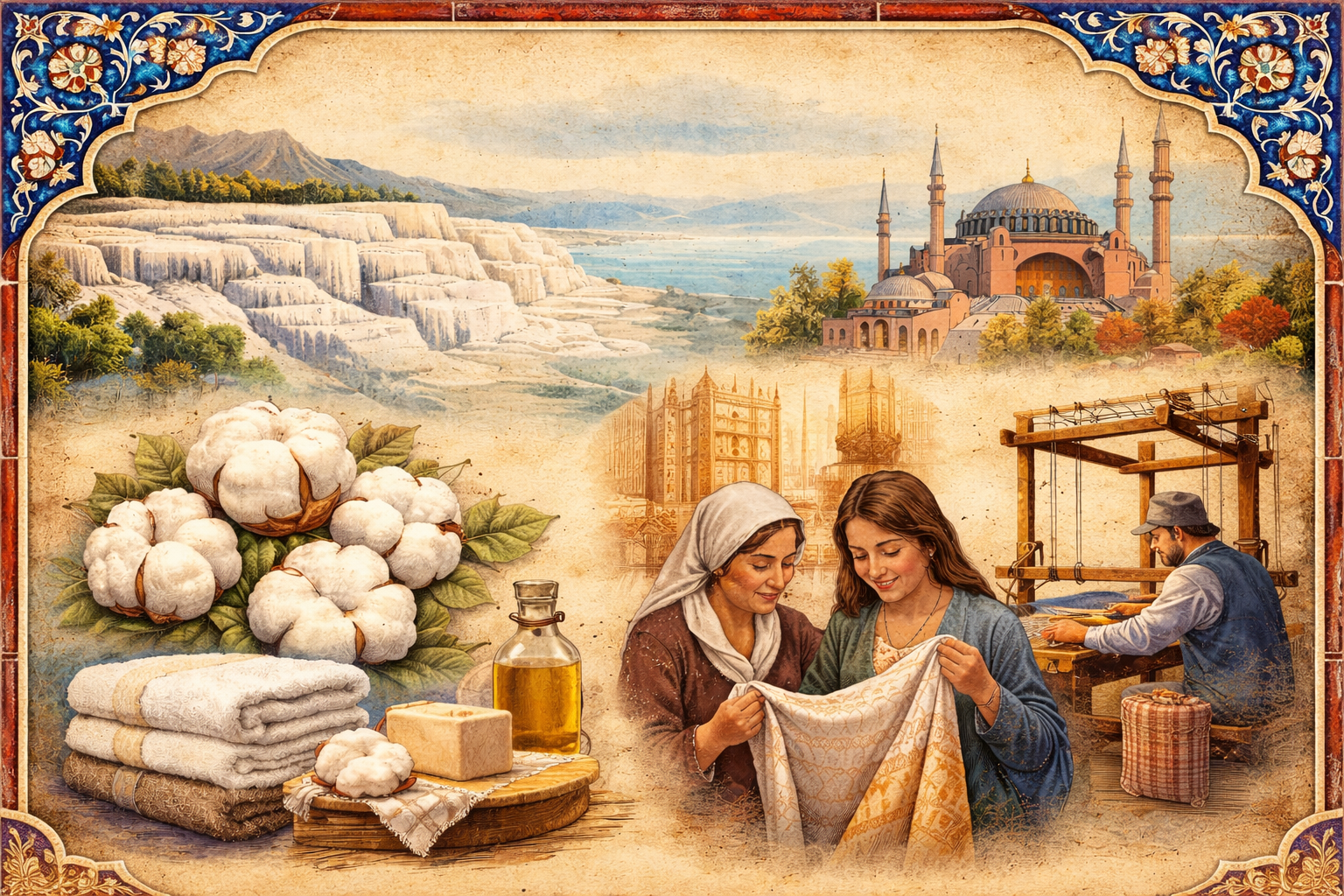
Turkish cotton isn’t simply cotton grown in Turkey. True Turkish cotton—the kind that earned its legendary reputation—comes from a specific microclimate where the Aegean Sea meets the fertile river valleys of western Anatolia.

Here, the combination of mineral-rich soil, Mediterranean sunshine, and coastal humidity creates cotton with unusually long fibers. These extra-long staples, as textile experts call them, are the secret behind everything that makes Turkish cotton exceptional: the softness that improves with washing, the absorbency that outperforms synthetic alternatives, and the durability that transforms a towel from a disposable commodity into an heirloom.

This isn’t marketing language. It’s botany. The same way Champagne grapes from the Champagne region produce something no other vineyard can replicate, Aegean cotton possesses qualities that cannot be manufactured elsewhere. The terroir, to borrow a term from winemaking, is irreplaceable.

The Hammam: Where a Bathing Culture Became an Art Form

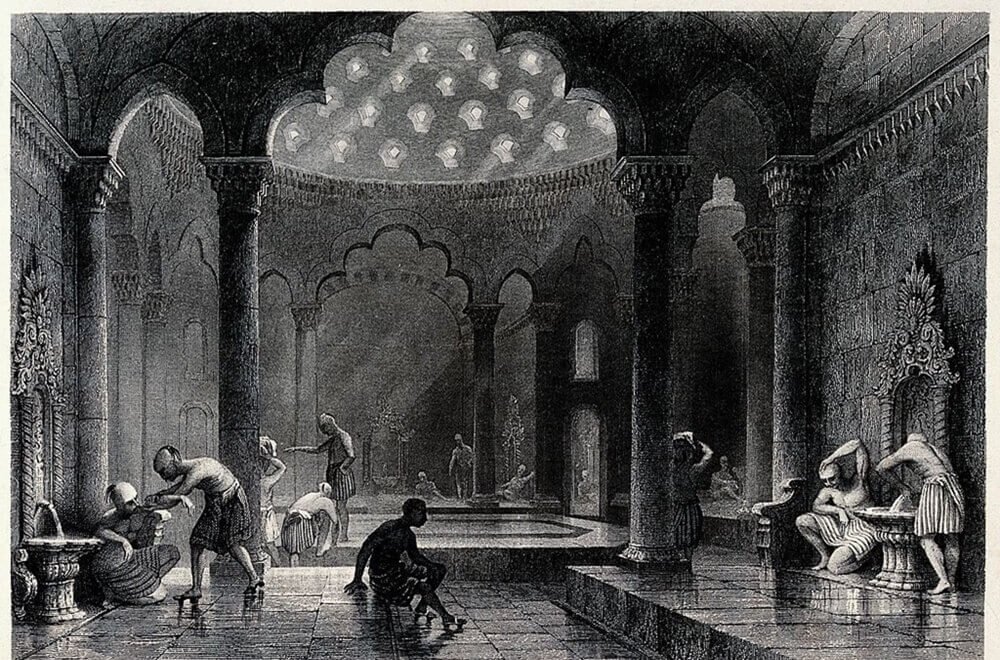
To understand Turkish textiles, you must first understand the hammam—the traditional bathhouse that served as the social and spiritual heart of Ottoman life for over six centuries.

The hammam was never merely about getting clean. It was ritual. Transition. A weekly practice where merchants and mothers, scholars and soldiers would shed their social roles along with their clothes and enter a space of steam, conversation, and renewal.

This culture demanded textiles that could perform. The traditional peshtemal—a flat-woven towel that wraps the body—needed to absorb moisture quickly, dry rapidly in the humid bathhouse air, and remain light enough to carry through the streets. It needed to feel soft against skin that had been scrubbed and steamed to sensitivity. And it needed to last, because quality goods were investments, not impulse purchases.

Six hundred years of this demanding daily use created a textile tradition optimized not for appearance alone, but for genuine performance. Every technique that survived—the specific weave patterns, the hand-loomed construction, the finishing methods—earned its place through generations of practical testing.

The Artisan’s Hand: What Machines Cannot Replicate

Walk into a modern textile factory, and you’ll see efficiency: computerized looms producing hundreds of identical towels per hour, quality controlled by sensors, packed by robots. There’s nothing wrong with this. It’s how most of the world’s textiles are made.

But visit a traditional Turkish weaving village, and you’ll see something different.

You’ll see a weaver who learned her craft from her mother, who learned from her mother before that. You’ll see hands that can feel the tension of a thread and adjust instinctively, creating subtle variations in density that give the fabric its characteristic drape. You’ll see decisions made by intuition developed over decades—when to tighten the weave, when to let it breathe.

This isn’t inefficiency. It’s intelligence that cannot be programmed.

Hand-loomed Turkish textiles carry what the Japanese call “te-aji”—the flavor of the hand. It’s why two towels from the same village, made by different artisans, will feel slightly different. Each carries the signature of its maker, invisible but present, like the brushstroke of a painter.

Mass production optimizes for consistency. Artisan production optimizes for excellence.

The Quick-Dry Revolution: Ancient Wisdom Meets Modern Life

Here’s what surprises most people about traditional Turkish towels: they’re not thick and fluffy.

Walk through any department store, and you’ll see towels marketed on their weight, their pile height, their sheer volume of cotton. The implication is clear: more is better. Luxury means heft.

Turkish weavers knew something different.

The traditional flat weave of an authentic Turkish towel creates maximum surface area with minimum bulk. The result is a textile that absorbs water rapidly, releases it just as quickly, and dries in a fraction of the time of its Western counterparts. In the humid environment of a hammam, this wasn’t a luxury feature—it was essential.

Today, this ancient engineering solves thoroughly modern problems. Turkish towels pack flat in a suitcase. They dry overnight in a hotel bathroom. They don’t develop the musty smell of towels that never fully dry between uses. They’re lighter to carry, easier to wash, faster to line-dry.

What feels like innovation is actually inheritance.

Why Heritage Matters Now More Than Ever

We live in an age of infinite choice and disposable goods. The average household replaces its towels every two years. Landfills overflow with textiles that couldn’t withstand the demands of daily life.

Choosing heritage is choosing differently.

When you invest in textiles made according to six centuries of accumulated craft knowledge, you’re not paying for a brand story. You’re paying for towels that will grow softer with every wash instead of deteriorating. Bathrobes that drape like they were made for your body. Blankets that your children might inherit.

You’re choosing to participate in an economic system that values skill over speed, quality over quantity, artisans over algorithms.

And perhaps most importantly, you’re choosing to surround yourself with objects that carry meaning. Every Turkish textile is a small act of cultural preservation—a vote for the continuation of knowledge that took six hundred years to develop and could disappear in a single generation of neglect.

The Invitation

Heritage is not a museum exhibit. It’s a living practice that survives only when people choose to engage with it.

The next time you reach for a towel, consider what you’re holding. Is it a disposable commodity, manufactured to hit a price point and destined for a landfill? Or is it something more—a continuation of human craft, optimized by centuries of use, carrying the intelligence of generations?

The sultans knew what they had. The hammam bathers knew. The village weavers still know.

Now, so do you.


Cotton & Steam brings authentic Turkish textiles to those who appreciate the difference between products made for everyone and pieces crafted for those who understand quality. Explore our collection of hand-selected Turkish cotton bathrobes, towels, and throws—each carrying six centuries of heritage into your home.


Related Reading:

  • Turkish Cotton vs. Egyptian Cotton: What Luxury Hotels Know That You Don’t
  • From Hammam to Home: The Ritual of Turkish Bathing
  • How to Care for Your Turkish Cotton: Making Luxury Last

Sign Up Newsletter

Sign up our newsletter and save 25% off for the next purchase!

Subscribe to our newsletters and don’t miss new arrivals, the latest fashion updates and our promotions.