Here’s a question we hear often: “I love Turkish textiles, but should I choose cotton or bamboo?”
It’s a good question—and the honest answer is that it depends entirely on you. Your climate. Your skin. Your priorities. The way you actually live, not the way lifestyle magazines suggest you should.
Both Turkish cotton and bamboo textiles come from the same artisan tradition. Both are crafted with the same centuries-old techniques. Both will outlast and outperform mass-produced alternatives by years.
But they feel different. They perform differently. And choosing the right one means understanding what each does best.
Consider this your guide to making that choice with confidence.
The Short Answer (For Those in a Hurry)
Choose Turkish cotton if you:
- Love classic, plush softness
- Want maximum absorbency
- Prefer textiles that develop character over time
- Live in a moderate climate
- Value the traditional hammam experience
Choose bamboo (or bamboo-cotton blends) if you:
- Have sensitive or reactive skin
- Run hot or live in a warm climate
- Want the silkiest possible hand feel
- Prioritize eco-conscious materials
- Prefer lightweight, breathable fabrics
Still here? Good. Let’s explore the nuances.
Understanding the Materials
Turkish Cotton: The Heritage Choice
Turkish cotton has six centuries of refinement behind it. Grown in the Aegean river valleys, woven by artisans whose families have practiced the craft for generations, it represents the pinnacle of what cotton can become.
The fibers are long-staple, meaning each individual fiber stretches further than ordinary cotton. This creates fabric that’s stronger, softer, and more absorbent. But here’s what makes Turkish cotton unique: it improves with use. The fibers relax and bloom over time, becoming progressively softer through dozens—even hundreds—of wash cycles.
Turkish cotton is substantial without being heavy. It absorbs moisture eagerly and releases it efficiently. It feels like quality because it is quality, in the most literal sense.
Bamboo: The Modern Evolution
Bamboo textiles represent something newer—a material that Turkish artisans have embraced and elevated using traditional techniques.
Bamboo fiber comes from the pulp of bamboo grass, processed into a silky viscose that can be woven alone or blended with cotton. The resulting fabric has properties that cotton simply can’t match: a natural sheen, extraordinary softness from the first touch, and inherent temperature regulation that keeps you comfortable in any climate.
When Turkish weavers apply their centuries of expertise to bamboo fiber, the result is something remarkable—a textile that honors tradition while solving thoroughly modern problems.
The Feel: Plush vs. Silky
This is often the deciding factor, and it’s worth experiencing both before you choose.
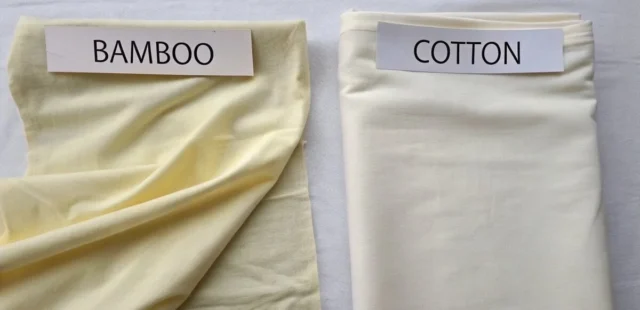
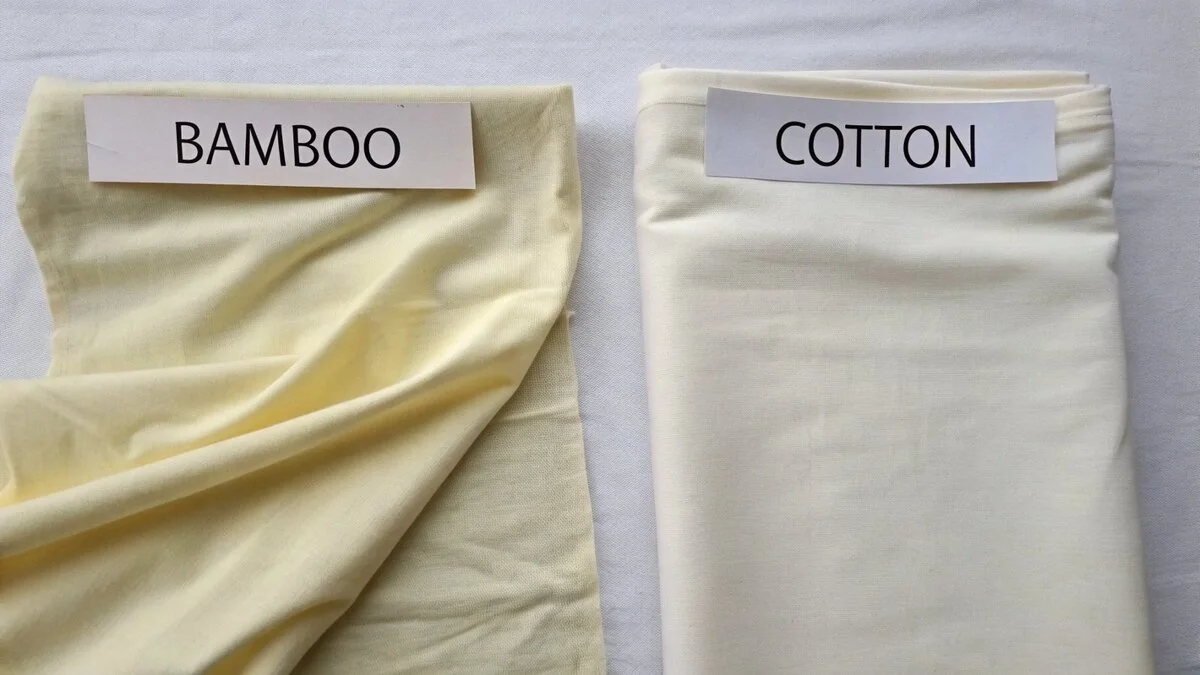
Turkish cotton has a soft, textured feel. There’s substance to it—you know you’re holding something real. The surface has gentle variation, the hallmark of natural fiber and artisan construction. It feels cozy, enveloping, like being wrapped in comfort.
Bamboo feels different immediately. The first word most people use is “silky.” The fibers create a smooth, almost liquid drape against skin. It’s lighter, more fluid, with a subtle sheen that catches light. Where cotton feels like a warm embrace, bamboo feels like a cool caress.
Neither is better. But one will feel like home to you.
Our recommendation: If you love the feeling of a well-worn favorite sweater, you’ll gravitate toward cotton. If you prefer the sensation of sliding into high-thread-count sheets, bamboo will speak to you.
Absorbency: Different Strengths
Both materials excel at moisture management, but they approach the job differently.
Turkish cotton is the absorbency champion in pure capacity. Those long-staple fibers create maximum surface area, pulling water away from skin quickly and thoroughly. A Turkish cotton towel can absorb several times its weight in water—and still dry you effectively.
Bamboo absorbs moisture slightly less aggressively but offers something cotton can’t: wicking. Bamboo fibers don’t just absorb water; they actively move it away from your skin and spread it across the fabric surface for faster evaporation. The result is a “drier” feeling even when the towel has absorbed significant moisture.
Our recommendation: For post-shower drying and beach days, Turkish cotton’s superior absorption is ideal. For workouts, hot sleepers, and humid climates where you want moisture moved away from skin continuously, bamboo has the edge.
Temperature Regulation: Warm vs. Cool
Here’s where the two materials diverge most significantly.
Turkish cotton provides gentle insulation. It holds a small amount of warmth against your body, making it perfect for stepping out of a hot shower into a cool bathroom, or wrapping up on a crisp morning. It’s comforting without being stifling.
Bamboo is naturally thermoregulating. The fiber structure allows air to circulate while simultaneously wicking moisture, creating a cooling effect against skin. In warm conditions, bamboo feels noticeably cooler than cotton. In cool conditions, it still provides coverage without causing overheating.
Our recommendation: If you’re always cold, choose cotton. If you’re always warm—or if your climate swings between extremes—bamboo adapts better.
Skin Sensitivity: The Gentle Giant
This matters more than most people realize.
Turkish cotton is naturally hypoallergenic when processed without harsh chemicals. High-quality Turkish cotton, especially organic varieties, is gentle enough for most skin types. However, some people with eczema, psoriasis, or highly reactive skin may find that even premium cotton creates subtle friction.
Bamboo has inherent properties that make it exceptional for sensitive skin. The smooth fiber surface creates less friction against skin. Bamboo is naturally antibacterial—the bamboo plant produces a bio-agent called “bamboo kun” that survives processing and inhibits bacterial growth in the fabric. This means fewer irritants, less odor, and a cleaner feel against reactive skin.
Our recommendation: If you’ve ever experienced irritation from textiles, or if you’re shopping for someone with skin sensitivities, bamboo is the safer choice. For most people, either material works beautifully.
Durability: The Long View
Both materials, when crafted with Turkish artisan techniques, will outlast mass-produced alternatives by years. But they age differently.
Turkish cotton develops what we call “character.” It softens and relaxes, becoming more personal over time. A well-maintained Turkish cotton robe becomes like a second skin after a year of use—better than new. Expect 5-10+ years of regular use from quality pieces, with proper care.
Bamboo maintains its original character more consistently. It will soften slightly but won’t transform the way cotton does. Some people prefer this stability; others miss the evolution. Bamboo is also slightly more delicate—it requires gentler washing and shouldn’t be exposed to high heat. With proper care, expect 3-7 years of use.
Our recommendation: If you’re the type who treasures a favorite item that improves with age, cotton rewards that relationship. If you prefer consistent performance and don’t want to think much about care instructions, bamboo asks less of you day-to-day but may need replacing sooner.
Environmental Considerations
Both materials have sustainability stories, though they’re different stories.
Turkish cotton is a natural fiber that biodegrades completely. Organic Turkish cotton is grown without synthetic pesticides, making it a responsible choice. The environmental impact depends largely on water usage in cultivation and whether chemical dyes are used in processing.
Bamboo has remarkable eco-credentials at the growing stage. Bamboo is the fastest-growing plant on Earth, requires no pesticides, needs minimal water, and actually improves soil quality. It produces 35% more oxygen than equivalent trees and sequesters significant carbon.
However, most bamboo fabric (including ours) is bamboo viscose, which requires chemical processing to transform the plant into fiber. This processing can be done responsibly or irresponsibly, depending on the manufacturer. We work only with producers who use closed-loop systems that recapture and reuse processing chemicals.
Our recommendation: Both choices are far more sustainable than synthetic alternatives. If minimal processing matters most to you, cotton is simpler. If you prioritize renewable sourcing and carbon footprint, bamboo has advantages.
Matching Material to Lifestyle
Let’s get practical. Here’s how to choose based on how you actually live:
Choose Cotton Bathrobes If You:
- Love wrapping up after a hot shower
- Keep your home on the cooler side
- Want a robe that becomes softer and more personal over years
- Enjoy the classic spa experience
- Don’t mind a bit more weight and bulk
Choose Bamboo Bathrobes If You:
- Tend to overheat easily
- Live in a warm or humid climate
- Have sensitive skin or allergies
- Want the silkiest possible feel
- Prefer lightweight fabrics that don’t weigh you down
Choose Cotton Towels If You:
- Want maximum drying power
- Prefer a plush, substantial feel
- Use towels primarily for post-shower drying
- Appreciate textiles that improve with washing
Choose Bamboo Towels If You:
- Work out frequently and need odor resistance
- Want towels that stay fresh between washes
- Travel often and need quick-drying, lightweight options
- Have family members with skin sensitivities
Choose Cotton Throws If You:
- Want warmth and coziness
- Use throws primarily in air-conditioned spaces
- Love the look of textured, artisan weaves
- Want a throw that can double as a light blanket
Choose Bamboo Throws If You:
- Use throws year-round, including summer
- Want something light enough to drape without bulk
- Prefer a silky, smooth texture
- Value breathability over warmth
The Blend: Best of Both Worlds
Here’s something worth knowing: you don’t always have to choose.
Many of our most popular pieces are Turkish cotton-bamboo blends, combining the absorbency and durability of cotton with the silkiness and temperature regulation of bamboo. These blends typically range from 60/40 to 70/30 cotton-to-bamboo ratios.
The result is a textile that:
- Absorbs like cotton but wicks like bamboo
- Feels silkier than pure cotton but more substantial than pure bamboo
- Regulates temperature better than cotton alone
- Maintains durability closer to cotton
- Works beautifully across climates and seasons
If you’re genuinely torn between the two materials, a blend lets you experience the benefits of both.
The Invitation to Experience
Here’s what we’ve learned after years of working with both materials: people know what they love once they feel it.
Some customers touch bamboo and never look back. Others pick up a Turkish cotton towel and feel an immediate sense of rightness. There’s no wrong answer—only your answer.
The beauty of artisan Turkish textiles is that either choice connects you to centuries of craft, supports traditional weaving communities, and brings genuine quality into your daily rituals.
Cotton or bamboo, you’re choosing well.
Cotton & Steam offers both pure Turkish cotton and premium bamboo collections, each crafted by artisan weavers using traditional techniques. Explore our range to find the textiles that match your lifestyle—or reach out to us directly for personalized recommendations.