+90 505 054 8890 info@cottonandsteam.com
Soldes de Noël : réductions 29%! Achetez maintenant


In an age of mass production and disposable goods, there’s something quietly revolutionary about wrapping yourself in a textile tradition that predates the printing press.
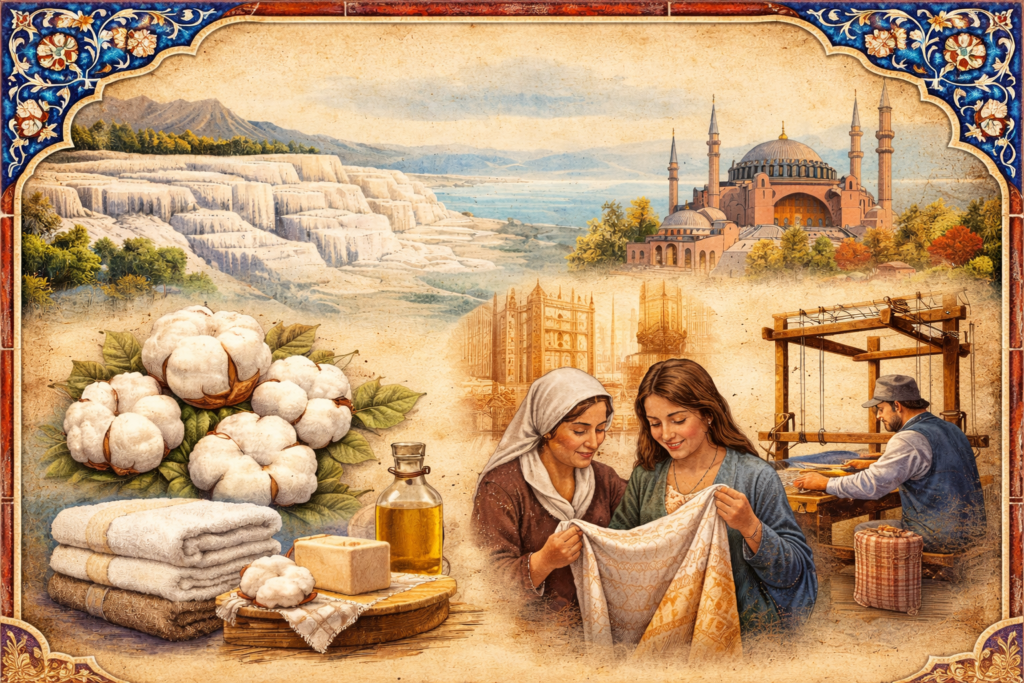
Long before Turkish cotton became synonymous with luxury hotels and high-end spas, it was the treasure of sultans. Woven in workshops along the Aegean coast, these textiles draped the private chambers of the Ottoman Empire, a closely guarded secret of softness and durability that the Western world wouldn’t discover for centuries.
Today, when you run your hand across authentic Turkish cotton, you’re touching the same tradition. The same soil. Often, the same family lineages of artisans who’ve passed their craft from grandmother to granddaughter for generations.
But why should this matter to you, standing in your bathroom in 2025, deciding which towel to buy?
Because heritage isn’t nostalgia. It’s accumulated wisdom.
The Aegean Advantage: Where Geography Becomes Luxury
Turkish cotton isn’t simply cotton grown in Turkey. True Turkish cotton—the kind that earned its legendary reputation—comes from a specific microclimate where the Aegean Sea meets the fertile river valleys of western Anatolia.
Here, the combination of mineral-rich soil, Mediterranean sunshine, and coastal humidity creates cotton with unusually long fibers. These extra-long staples, as textile experts call them, are the secret behind everything that makes Turkish cotton exceptional: the softness that improves with washing, the absorbency that outperforms synthetic alternatives, and the durability that transforms a towel from a disposable commodity into an heirloom.
This isn’t marketing language. It’s botany. The same way Champagne grapes from the Champagne region produce something no other vineyard can replicate, Aegean cotton possesses qualities that cannot be manufactured elsewhere. The terroir, to borrow a term from winemaking, is irreplaceable.

The Hammam: Where a Bathing Culture Became an Art Form
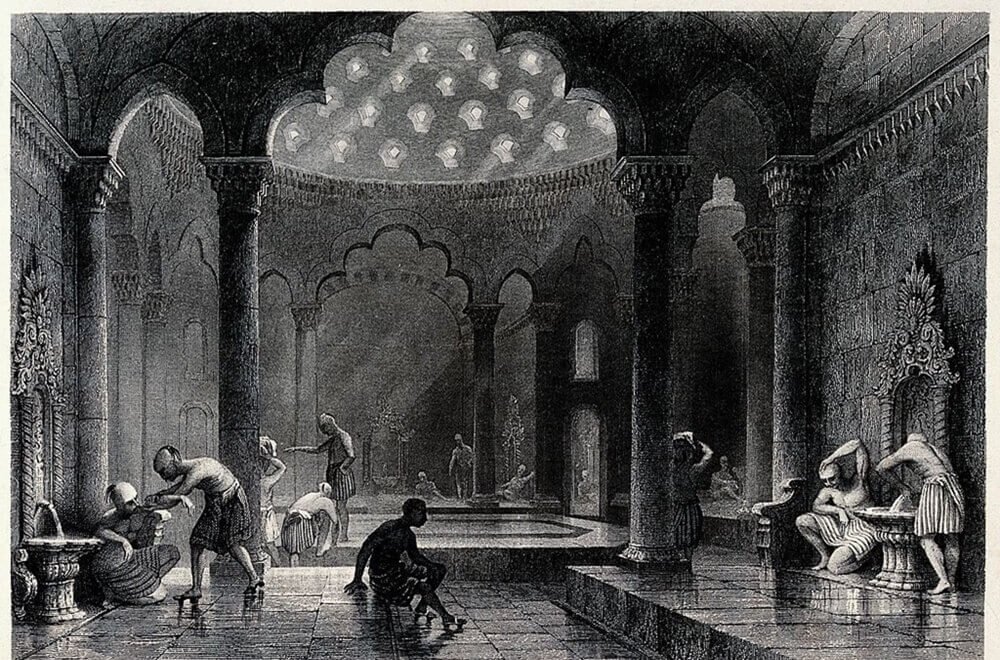
To understand Turkish textiles, you must first understand the hammam—the traditional bathhouse that served as the social and spiritual heart of Ottoman life for over six centuries.
The hammam was never merely about getting clean. It was ritual. Transition. A weekly practice where merchants and mothers, scholars and soldiers would shed their social roles along with their clothes and enter a space of steam, conversation, and renewal.
This culture demanded textiles that could perform. The traditional peshtemal—a flat-woven towel that wraps the body—needed to absorb moisture quickly, dry rapidly in the humid bathhouse air, and remain light enough to carry through the streets. It needed to feel soft against skin that had been scrubbed and steamed to sensitivity. And it needed to last, because quality goods were investments, not impulse purchases.
Six hundred years of this demanding daily use created a textile tradition optimized not for appearance alone, but for genuine performance. Every technique that survived—the specific weave patterns, the hand-loomed construction, the finishing methods—earned its place through generations of practical testing.
The Artisan’s Hand: What Machines Cannot Replicate
Walk into a modern textile factory, and you’ll see efficiency: computerized looms producing hundreds of identical towels per hour, quality controlled by sensors, packed by robots. There’s nothing wrong with this. It’s how most of the world’s textiles are made.
But visit a traditional Turkish weaving village, and you’ll see something different.
You’ll see a weaver who learned her craft from her mother, who learned from her mother before that. You’ll see hands that can feel the tension of a thread and adjust instinctively, creating subtle variations in density that give the fabric its characteristic drape. You’ll see decisions made by intuition developed over decades—when to tighten the weave, when to let it breathe.
This isn’t inefficiency. It’s intelligence that cannot be programmed.
Hand-loomed Turkish textiles carry what the Japanese call “te-aji”—the flavor of the hand. It’s why two towels from the same village, made by different artisans, will feel slightly different. Each carries the signature of its maker, invisible but present, like the brushstroke of a painter.
Mass production optimizes for consistency. Artisan production optimizes for excellence.

The Quick-Dry Revolution: Ancient Wisdom Meets Modern Life
Here’s what surprises most people about traditional Turkish towels: they’re not thick and fluffy.
Walk through any department store, and you’ll see towels marketed on their weight, their pile height, their sheer volume of cotton. The implication is clear: more is better. Luxury means heft.
Turkish weavers knew something different.
The traditional flat weave of an authentic Turkish towel creates maximum surface area with minimum bulk. The result is a textile that absorbs water rapidly, releases it just as quickly, and dries in a fraction of the time of its Western counterparts. In the humid environment of a hammam, this wasn’t a luxury feature—it was essential.
Today, this ancient engineering solves thoroughly modern problems. Turkish towels pack flat in a suitcase. They dry overnight in a hotel bathroom. They don’t develop the musty smell of towels that never fully dry between uses. They’re lighter to carry, easier to wash, faster to line-dry.
What feels like innovation is actually inheritance.
Why Heritage Matters Now More Than Ever
We live in an age of infinite choice and disposable goods. The average household replaces its towels every two years. Landfills overflow with textiles that couldn’t withstand the demands of daily life.
Choosing heritage is choosing differently.
When you invest in textiles made according to six centuries of accumulated craft knowledge, you’re not paying for a brand story. You’re paying for towels that will grow softer with every wash instead of deteriorating. Bathrobes that drape like they were made for your body. Blankets that your children might inherit.
You’re choosing to participate in an economic system that values skill over speed, quality over quantity, artisans over algorithms.
And perhaps most importantly, you’re choosing to surround yourself with objects that carry meaning. Every Turkish textile is a small act of cultural preservation—a vote for the continuation of knowledge that took six hundred years to develop and could disappear in a single generation of neglect.
The Invitation
Heritage is not a museum exhibit. It’s a living practice that survives only when people choose to engage with it.
The next time you reach for a towel, consider what you’re holding. Is it a disposable commodity, manufactured to hit a price point and destined for a landfill? Or is it something more—a continuation of human craft, optimized by centuries of use, carrying the intelligence of generations?
The sultans knew what they had. The hammam bathers knew. The village weavers still know.
Now, so do you.
Cotton & Steam brings authentic Turkish textiles to those who appreciate the difference between products made for everyone and pieces crafted for those who understand quality. Explore our collection of hand-selected Turkish cotton bathrobes, towels, and throws—each carrying six centuries of heritage into your home.
Related Reading:
- Turkish Cotton vs. Egyptian Cotton: What Luxury Hotels Know That You Don’t
- From Hammam to Home: The Ritual of Turkish Bathing
- How to Care for Your Turkish Cotton: Making Luxury Last
Guide & Conseils Pratiques